Rain won’t have to ruin your trip if you plan for it. Pick high, well-drained ground, keep gear dry with tarps and waterproof bags, and prioritize staying warm and sheltered — those steps will let you camp safely and comfortably in wet weather.
You’ll learn practical, easy-to-apply tips for choosing a dry campsite, setting up protective tarps, and managing wet gear so you stay warm and dry. Expect simple hacks for cooking, lighting, and staying cozy under a tarp or inside a tent when rain arrives.
This post also covers safety and comfort: how to avoid flooding, reduce hypothermia risk, and keep morale high with low-effort activities and contingency planning.
Essential Tips for Camping in the Rain
Plan site placement, pack durable waterproof gear, and rig your shelter so water runs away from your living space. Focus on drainage, sealed seams, and quick-access waterproof layers to stay dry and comfortable.
Choosing the Right Campsite
Pick higher ground with natural drainage; avoid hollows, seasonal streambeds, and the base of slopes where runoff concentrates. Look for firm ground with a slight slope so water flows away from your tent floor.
Choose a site under a canopy of spaced trees rather than a dense stand; that reduces drip and wind loading while preventing branches from shedding large amounts of water onto your shelter. Clear the footprint of loose debris and dig shallow drainage trenches around the tent perimeter if heavy rain is expected.
Avoid pitching directly under dead branches or near signs of soil saturation like exposed roots or spongy ground. Test for standing water by pressing the soil—if it stays depressed, move on.
Selecting Waterproof Gear
Prioritize a waterproof tent with a full-coverage rainfly and taped seams; a tent rated with a hydrostatic head of 1500mm or higher performs well in prolonged rain. Bring a footprint or groundsheet sized slightly smaller than the tent floor to prevent pooled water from wicking up into seams.
Pack a breathable waterproof jacket with a hood (Gore-Tex or similar), waterproof pants, and quick-drying base layers. Store clothing and electronics in dry bags or zippered waterproof stuff sacks; use a separate bag for sleeping gear.
Bring repair items: seam sealer, duct tape, spare guylines, and a patch kit for inflatable pads. Replace zippers and re-waterproof gear between trips if you notice reduced performance.
Setting Up Shelter Effectively
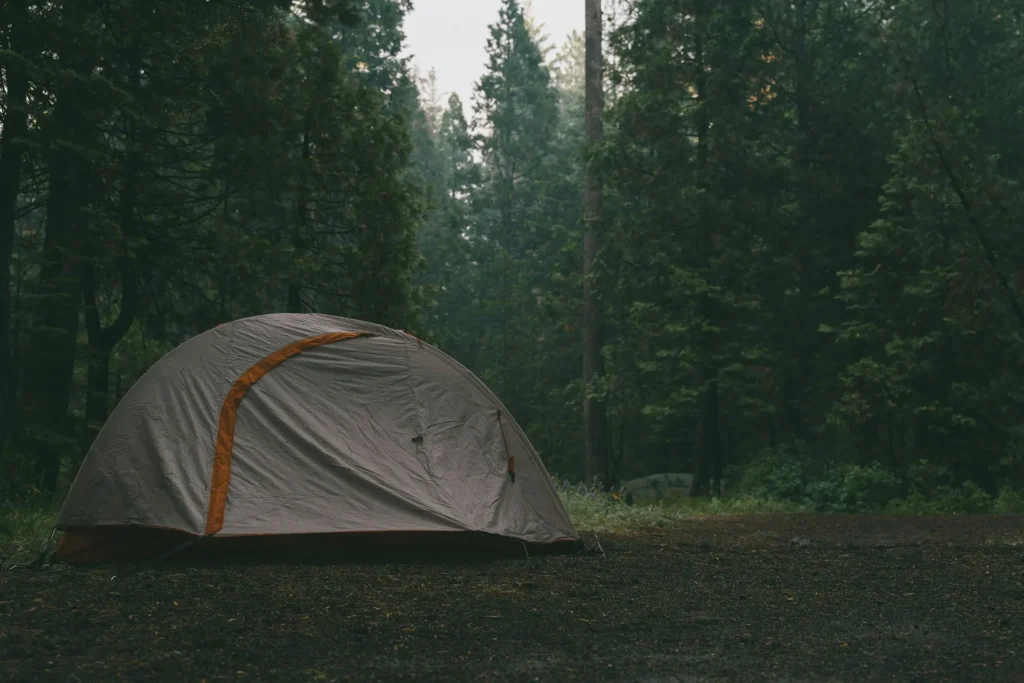
Site your tent on the highest spot within your chosen area and orient the door away from prevailing wind-driven rain. Stake and guy out the rainfly tightly to create a steep water-shedding angle that prevents pooling.
Create an extended vestibule with a tarp if you expect heavy rain; angle the tarp so runoff diverts past the tent and stake guylines low and wide for stability. Use vestibule space for cooking and wet gear, keeping the interior dry.
Seal potential entry points by tucking the tent floor edge slightly up on top of the footprint and ensuring zippers are closed before it rains. Ventilate by cracking vents or opening a little mesh to reduce condensation while maintaining protection from water.
Staying Comfortable and Safe
Focus on protecting your gear, keeping heat and dry layers available, cooking safely under shelter, and watching for signs of hypothermia. Small preparation choices—where you store items, how you set up a tarp, and which clothing you wear—make the biggest difference.
Keeping Belongings Dry
Prioritize a waterproof system: pack important items in dry bags or heavy-duty ziplock-style sacks. Store clothing, sleeping bags, and electronics in separate sealed bags so one leak doesn’t ruin everything.
Use a waterproof groundsheet under your tent and a seam-sealed rainfly over it. Elevate packs off the ground on logs or a pack stand and keep a small “day” dry bag inside the tent for items you need during the rain (phone, headlamp, spare socks). If you bring a tarp, rig it over your vestibule and at a slight angle so water runs away from the tent entrance.
Wipe off wet boots and gear before bringing them inside. Keep a dedicated waterproof stash for fuel and fire-starting materials—wet matches and soggy kindling are the simplest trip-enders.
Managing Campfire in Wet Conditions
Choose a sheltered spot or build your fire under a robust tarp with proper ventilation and distance from fabrics. Use a flat rock or a raised fire bed to keep the base dry and reduce soaking from wet ground.
Carry dry tinder in sealed containers—cotton tinder, fatwood, or commercial fire starters work well. Split wet wood to reach dry inner wood, and use a small saw or hatchet to create shavings. Arrange a teepee or log-cabin structure that encourages airflow and protects the core flame from rain.
Always have a waterproof lighter and backup ferrocerium rod. Keep a bucket of water or dirt nearby to extinguish the fire completely before sleeping or leaving the site. Follow campground rules about open fires and use a stove if fires are prohibited or unsafe.
Meal Preparation During Rain
Set up a cooking station under a stable tarp at least 6–8 feet from the tent to avoid carbon monoxide and sparks. Use a camp stove for reliable heat; keep fuel canisters dry in sealed bags.
Pre-plan meals that require minimal handling—one-pot dishes, pre-chopped ingredients in zip bags, and dehydrated meals that only need boiling water. Bring a lightweight cutting board and a dedicated container for dirty dishes to avoid cross-contamination. Use biodegradable soap and wash water at least 200 feet from water sources.
Keep utensils and spices in a dry, labeled pouch. If it’s windy, use a windscreen for your stove and anchor your tarp edges with rocks or guylines so your cooking area stays stable.
Staying Warm and Avoiding Hypothermia
Layer strategically: base layer moisture-wicking, insulating mid-layer (fleece or wool), and a waterproof breathable shell. Change out of wet clothes immediately and keep a set of dry socks and a hat accessible in a sealed bag.
Monitor for early hypothermia signs—persistent shivering, slurred speech, confusion, and slow responses. If you spot these, move the person to shelter, replace wet clothing with dry layers, and provide warm (not hot) sweetened fluids. Use body heat, warmed packs, or a sleeping bag rated for the temperatures you expect.
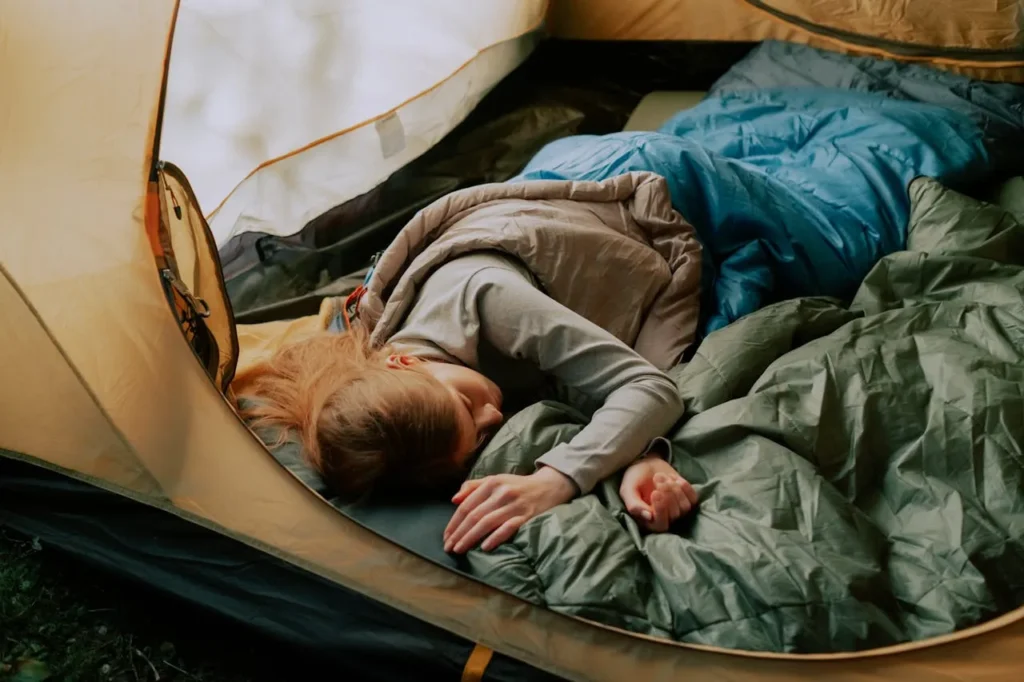
Keep a small emergency kit with hand warmers, a thermal blanket, and a headlamp. Plan sleep systems with an insulated sleeping pad under your sleeping bag to prevent conductive heat loss to wet ground.