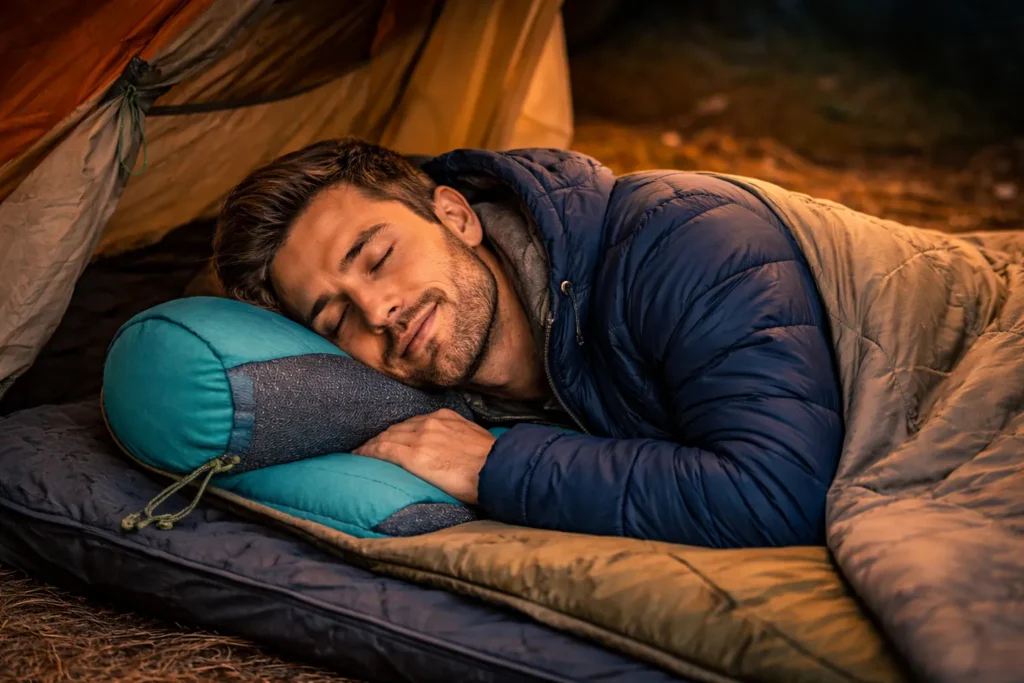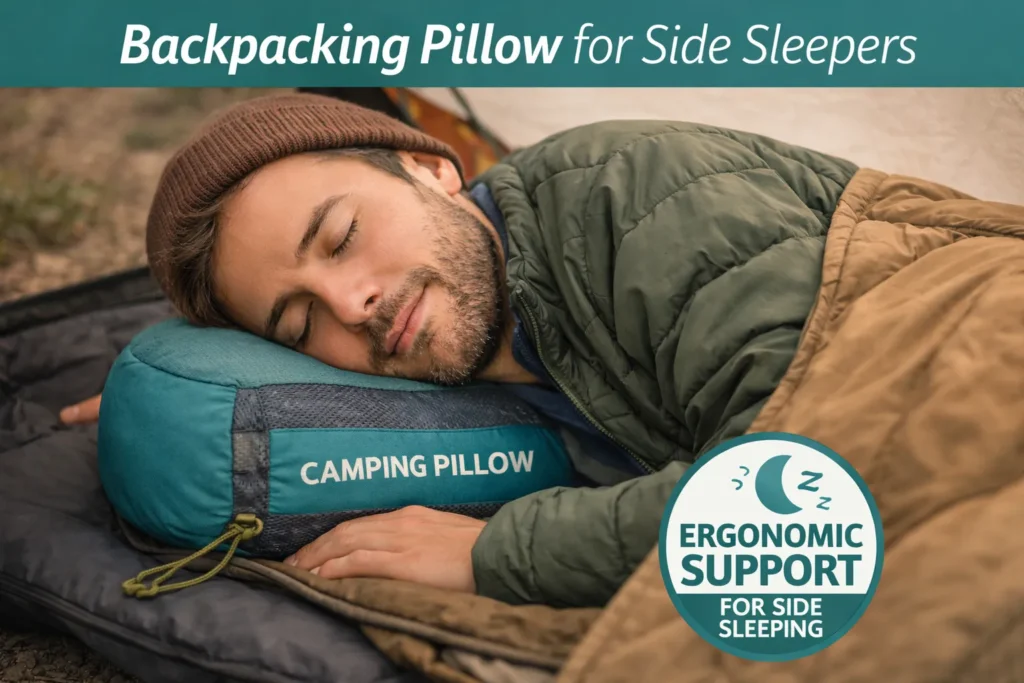
You can sleep well camping by prioritizing three things: a supportive sleep surface, temperature control, and a simple bedtime routine. Get a quality sleeping pad or air mattress, a seasonal sleeping bag or layered blankets, and a compact pillow — those three items alone will transform a rough night into a solid one.
This post will walk you through setting up a cozy sleep system, choosing gear that matches the conditions, and easy habits that help your body relax outdoors. Expect clear, practical tips you can use tonight whether you’re car camping, backpacking, or trying a rooftop tent.
Getting the Perfect Camping Sleep Setup
Dial in three core elements: the right sleeping bag for temperature, a pad that cushions and insulates, and a campsite spot that avoids wind, pooling water, and uneven ground.
Choosing the Right Sleeping Bag
Pick a bag with a temperature rating at least 10°F (6°C) below the coldest night you expect. For chilly shoulder-season nights, a 20°F-rated down bag with 650–900 fill power gives a high warmth-to-weight ratio; choose a synthetic bag if you expect wet conditions or need easier care.
Fit matters: a mummy cut traps heat more efficiently, while a rectangular bag gives room to move. Check fill type, shell fabric (ripstop or water-resistant), and zipper quality. Add a lightweight liner to boost warmth by 5–10°F or to keep a down bag clean.
Compress your bag only for transport; let it air out every day you camp. Store it uncompressed at home to preserve loft and insulation.
Finding a Comfortable Sleeping Pad
Prioritize R-value and pad thickness. Aim for R-value ≥ 4.0 if temps may drop near freezing; R-value 1–2 is fine for warm summer nights. For comfort, a 2–3 inch thick insulated air pad or an insulated self-inflating pad strikes a good balance between cushioning and packability.
Consider pad shape and width: rectangular pads give sleeping-room for side sleepers, while tapered pads save weight. Look for pads with anti-slip tops and durable valve systems that are easy to use in cold conditions.
Bring a thin foam closed-cell pad under an air pad if ground punctures worry you. Repair kits and a small hand pump add security and speed for on-site inflation.
Picking the Ideal Campsite Location
Choose high, level ground with natural wind breaks like shrubs or a leeward tree line. Avoid depressions, dry creek beds, and low spots where water collects during rain.
Clear the footprint of rocks, roots, and debris; lay a groundsheet or footprint slightly smaller than your tent floor to prevent water pooling and abrasion. Face your tent door away from prevailing winds, and orient ventilation to reduce condensation—open vents on cool nights and zip them down if rain arrives.
If sleeping near others, keep noise and light in mind. Camp at least 200 feet from water sources in sensitive areas and follow local rules about distance from trails, campsites, and fire rings.
Tips and Tricks for Sleeping Well Outdoors
You’ll want to control temperature, keep insects away, and reduce noise so you can actually sleep. Small gear choices and simple habits make the biggest difference.
Managing Temperature and Layering
Pick a sleeping bag rated at least 10°F below the lowest expected nighttime temperature. If you’re unsure of forecasts, choose a slightly warmer bag rather than a colder one. Use a sleeping pad with an R-value matched to the cold; closed-cell pads work well for ground insulation and inflatable pads add comfort.
Layer clothing: start with a moisture-wicking base (synthetic or merino), add an insulating mid-layer, and keep a lightweight, packable down or synthetic jacket for bedtime. Don’t sleep in damp clothes; change into dry socks and a dry base layer right before you get in the bag. Use a liner for an extra degree of warmth and easier laundering.
Control tent ventilation: crack vents to avoid condensation but close them if wind drives cold air. If it’s very cold, place a hot water bottle in your sleeping bag (sealed and in a sock) for targeted warmth. Always stash breathable items nearby rather than inside the bag to avoid overheating.
Keeping Bugs Away
Start by choosing a campsite away from standing water and dense vegetation when possible. Set up your tent and vestibule seams correctly and use built-in mesh panels for overnight protection. Check mesh for holes and repair them before you sleep.
Use a headnet and long-sleeve layers at dusk when bugs are most active. Apply a DEET, picaridin, or oil of lemon eucalyptus repellent to exposed skin and treated clothing per product instructions. For food and scented items, use bear hangs or sealed containers stored away from your sleep area to avoid attracting insects that feed on residues.
If biting insects persist, consider a small, battery-powered mosquito net or use a permethrin-treated tarp or clothing. Keep tent doors zipped and limit light inside the tent; cooler, red-spectrum lights attract fewer insects than bright white LEDs.
Noise Reduction Techniques
Pick a campsite away from trails, roads, and group cooking areas to reduce human noise. If you can’t avoid proximity, set up with your tent door facing away from noise sources and use landscape features—boulders, berms, trees—to block sound.
Use earplugs that fit well; foam earplugs reduce steady and intermittent noises without blocking you off from important sounds like a partner’s voice or campsite alarms. White-noise apps or a small battery-powered fan can mask unpredictable sounds like distant traffic or animal calls.
Inside the tent, secure loose items that rattle (stovepipes, zipper pulls) and keep gear in packed dry bags to stop shifting noises. Practice a quiet camp routine: light conversation volume, single-person tent entry and exit, and cooking away from sleeping areas to minimize disturbances after dark.