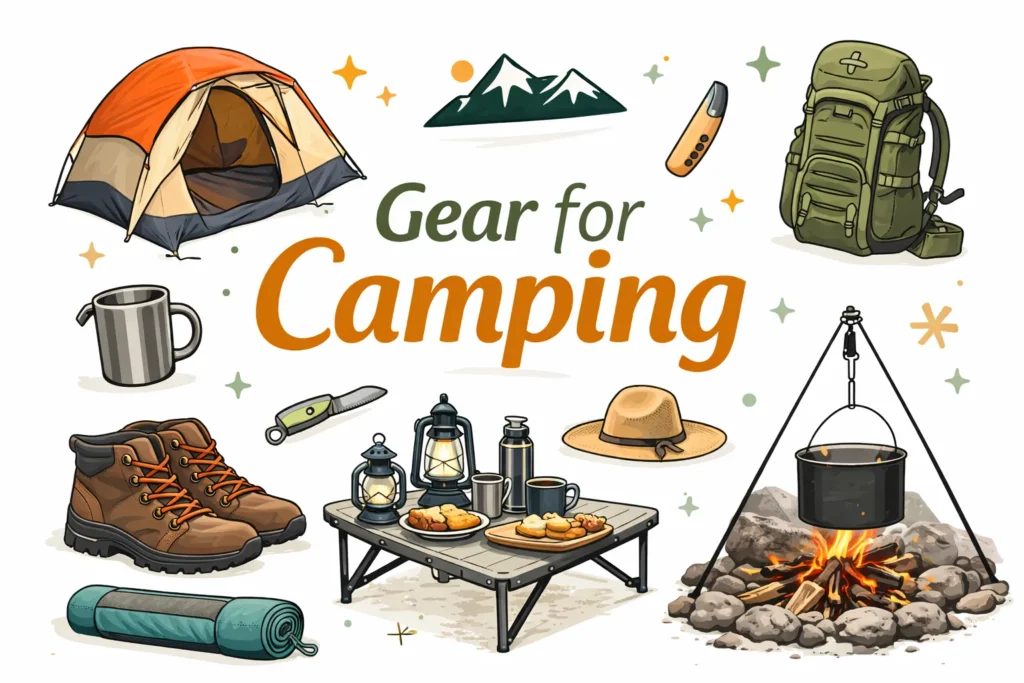
You want gear that keeps you safe, dry, and comfortable so you can focus on the trip—not scrambling for forgotten items. Bring a reliable shelter, warm sleep system, and a compact stove or fire kit; those three items alone solve most camping problems.
This post breaks down essential gear that every camper needs and shows a few extra items that make trips safer and easier. Expect practical picks and simple reasons to pack each item so you can make smart choices fast.
Follow along to outfit your pack with gear that actually improves your trip, from tents and sleeping setups to lighting, first aid, and tools that prevent common mistakes.
Essential Camping Gear
You’ll need reliable shelter, sleep systems that keep you warm and rested, compact cooking gear, and navigation tools that work offline. Choose items that match the season, the terrain, and how far you’ll carry them.
Sleep Systems for Comfort
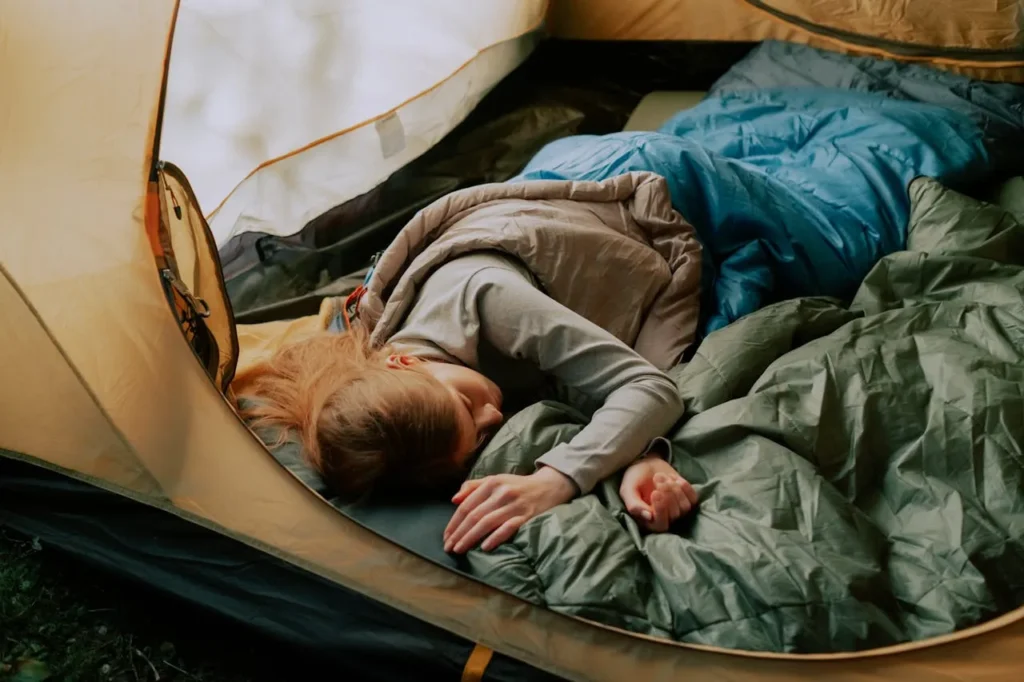
Your sleep system starts with a tent matched to capacity and weather rating. Choose a 3-season tent for most trips; go for a double-wall design with a vestibule if you want gear storage and better ventilation. Look at floor area and peak height so you and your gear fit comfortably.
A sleeping bag rated to 10–15°F below expected nighttime temps gives margin for cold snaps. Down fills pack smaller and weigh less, while synthetic fills retain insulation when wet. Use a sleeping pad with an R-value appropriate for the season—R ~1–2 for summer, R ~4+ for cold conditions.
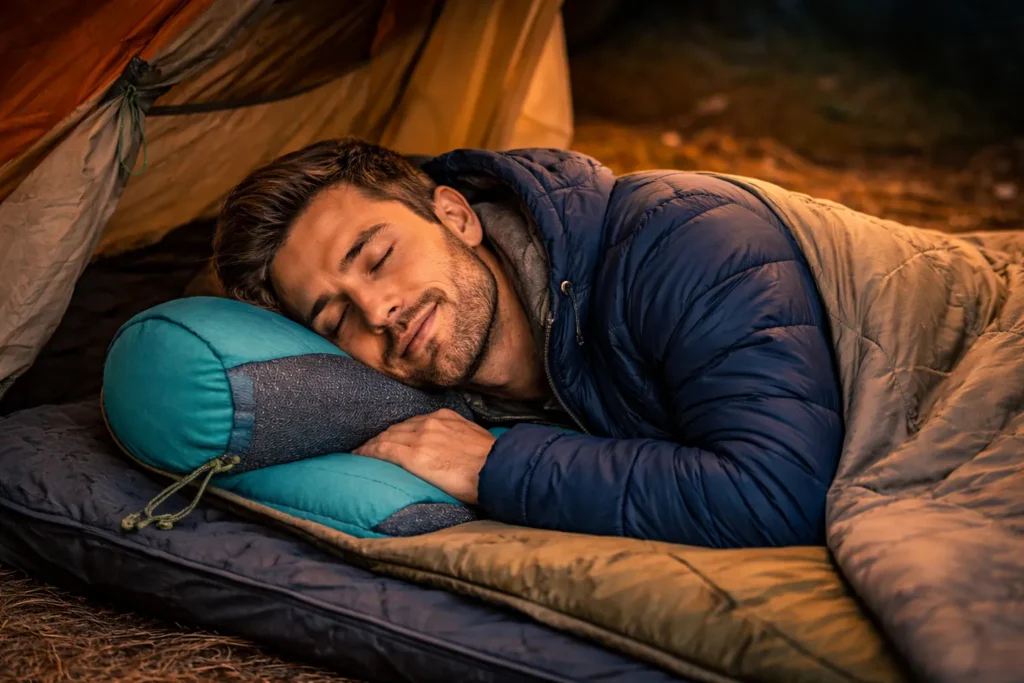
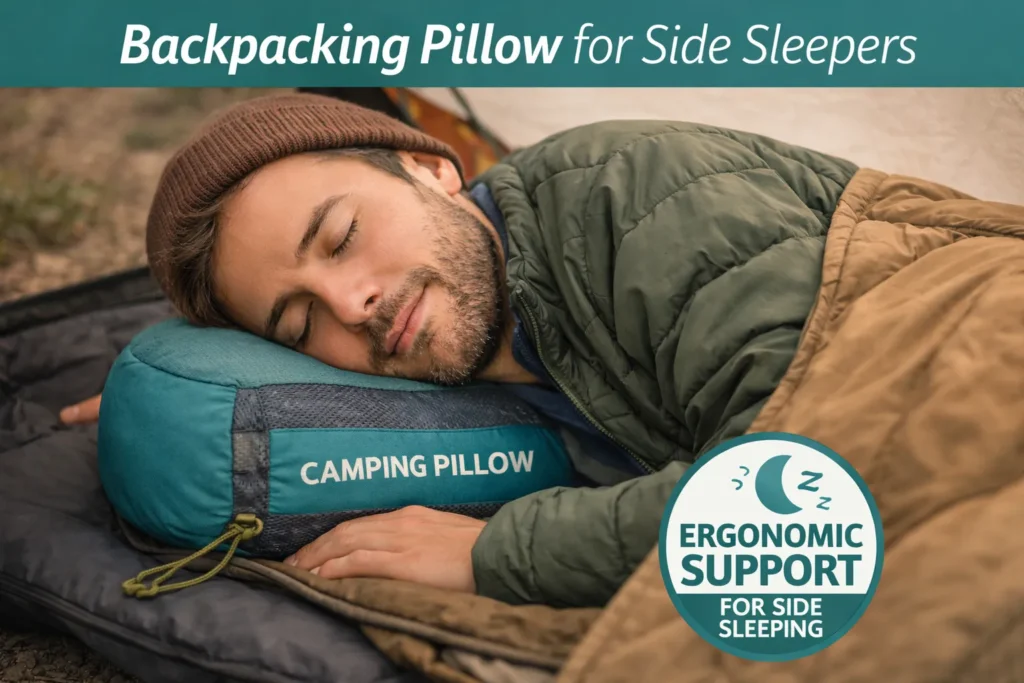
Bring a pillow or a stuff-sack with a fleece liner for neck support. Consider a lightweight tarp or footprint to protect the tent floor and extend tent life. Repair patches and seam sealer are small but essential items to fix damage quickly.
Cooking Equipment
Pick a stove that matches your trip length and fuel access: canister stoves for simplicity, liquid-fuel stoves for long or cold trips, and wood stoves where fire rules allow. Check boil time and simmer control; a stove with good simmer makes meals easier.
Bring a cookset sized for your group: one 1–2L pot for solo, 2–4L for two to three people, and a frying pan if you plan more complex meals. Include a lightweight kettle or lid that doubles as a plate. Carry fuel with at least 25–50% extra for unexpected delays.
Pack utensils: spork, small knife, and heat-resistant spatula. Add a compact cutting board, biodegradable soap, a small scrubber, and a collapsible sink or bowl. Store food in bear-resistant containers where required and bring a lightweight trash bag to pack out waste.
Navigation Tools
Always carry a detailed topo map of the area and a reliable compass that you know how to use. Paper maps don’t run out of battery and show contour detail; learn to take a bearing and triangulate your position.
Use a GPS device or phone with offline maps as a backup. Download maps and route tracks before you leave, and bring a portable power bank rated at least 10,000 mAh to recharge devices. Enable battery-saving modes and carry a cable and adapter for your devices.
Consider a handheld satellite communicator or PLB for remote trips beyond cell coverage. Practice sending a test message and understand the device’s SOS procedure. Finally, include a headlamp and spare batteries for night navigation and route checks.
Additional Gear for a Safer Trip
Bring gear that directly reduces risk and keeps you comfortable: appropriate layered clothing for the forecast and a well-stocked first aid kit tailored to the length of your trip, group size, and local hazards.
Weather-Appropriate Clothing
Pack layers so you can adapt to temperature swings. Start with a moisture-wicking base layer (synthetic or merino), add an insulating midlayer (fleece or lightweight down), and carry a waterproof, breathable shell (Gore-Tex or similar) for wind and rain. Include an extra insulating layer if nights drop below freezing.
Protect extremities: bring a warm hat, gloves, and wool or synthetic socks plus a spare pair. Choose footwear with ankle support and a tread suited to the terrain; bring lightweight camp shoes for evenings. For sun exposure, pack a wide-brim hat, UV-blocking sunglasses, and a long-sleeve sun shirt. Adjust quantities by trip length, expected weather, and how often you can dry clothing.
First Aid Supplies
Assemble a kit sized for your group and itinerary. At minimum include adhesive bandages (various sizes), sterile gauze, adhesive tape, antiseptic wipes, elastic bandage for sprains, tweezers, small scissors, and a CPR mask. Add blister care (moleskin, blister pads), pain relievers, allergy medication (antihistamines), and personal prescriptions enough for the trip plus a day.
Include a compact CPR/first-aid guide and know how to use items in your kit. For remote trips, add a SAM splint, suture strips, and an emergency antibiotic/antidiarrheal if medically appropriate and you are trained. Store kits in a waterproof bag and keep one easily reachable at camp.