Camping changes your sleep clock, but you can still wake up refreshed and ready for the day. Aim to sleep soon after sunset and wake near sunrise—matching natural light helps your body settle faster and boosts daytime energy.
You’ll learn how campsite choice, temperature, and gear shift the best sleep window and simple tricks to fall asleep earlier and stay asleep longer. Stick around to tune your schedule to the rhythms of the outdoors and get more out of each day on the trail.
Finding the Best Time to Sleep While Camping
You’ll balance sunlight, activity level, and local conditions to pick a sleep time that keeps you warm, safe, and rested. Small shifts—like going to bed 30–60 minutes earlier than at home—can make a big difference.
Understanding Natural Light Cycles
Sunrise and sunset largely set your sleep window while camping. Aim to be zipped into your sleeping bag within 1–2 hours after sunset so your body can follow the natural drop in light and melatonin production. Track local sunset times on your phone or a printed almanac; daylight saving and elevation can shift twilight by 10–30 minutes compared with nearby towns.
Moon phase affects brightness and temperature. A full moon can keep ambient light high, so use an eye mask or pitch in deeper shade if you need darker conditions. Conversely, cold nights after sunset mean you should get into warm clothing and a sleeping system earlier to avoid heat loss.
Adjusting to Outdoor Schedules
Match your bedtime to your daytime activity level. If you hike or paddle hard, your body will be ready to sleep earlier; plan dinners and camp chores so you can unwind 30–60 minutes before lights-out. Keep a simple pre-sleep routine: change into dry layers, snack light (small protein + carb), and do breathing or relaxation exercises to drop heart rate.
Noise and social camp habits matter. If other campers stay up late, use earplugs and set an agreed quiet time with your group. For solo trips, set an alarm and regular wake time to stabilize your rhythm across nights. Minor schedule shifts over 2–3 nights help you adapt without disrupting circadian cues.
Impacts of Location and Season
Latitude, elevation, and season change available sleep windows. In summer at high latitudes you may have short nights; plan naps or split sleep if darkness is too brief. In winter, long nights let you sleep earlier and longer, but require earlier insulation and hot water bottles to maintain core temperature through the night.
Local weather and terrain influence safety and comfort. Windy ridgelines kick up after sunset—prefer leeward, sheltered sites and earlier bedtimes. Near water, expect higher humidity and insect activity at dusk; bring a bug net and vent your shelter to reduce condensation. Adjust your sleep time to minimize exposure to predictable hazards like evening storms or wildlife movement.
Tips for a Better Night’s Sleep Outdoors
You’ll improve sleep by setting up a comfortable, insulated sleep space and cutting common disturbances like noise, light, and temperature swings. Focus on pad insulation, bag selection, campsite placement, and simple sound- and light-control tactics.
Preparing Your Camp for Rest
Choose flat ground with slight drainage—avoid low spots that collect cold air or water. Clear debris and large rocks, then lay a groundsheet to protect your pad from moisture and punctures.
Pick a sleeping pad with an R-value suited to expected temperatures; foam pads work well for cold ground, inflatable pads add comfort for warmer nights. Use a sleeping bag rated 5–10°F below the lowest nightly temperature you expect, or add a liner for extra warmth.
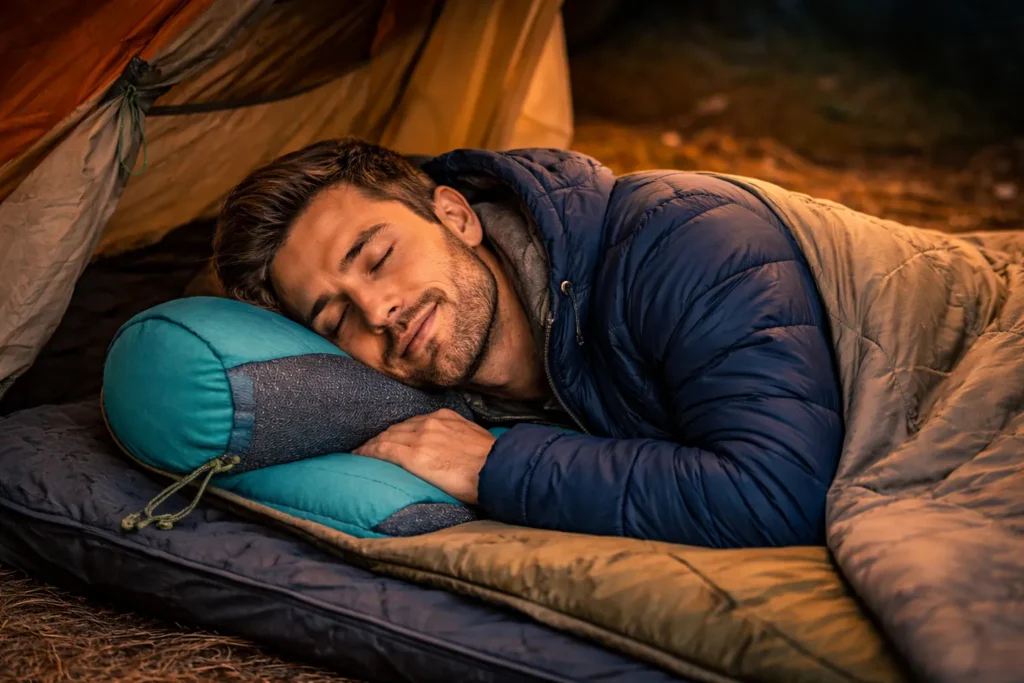
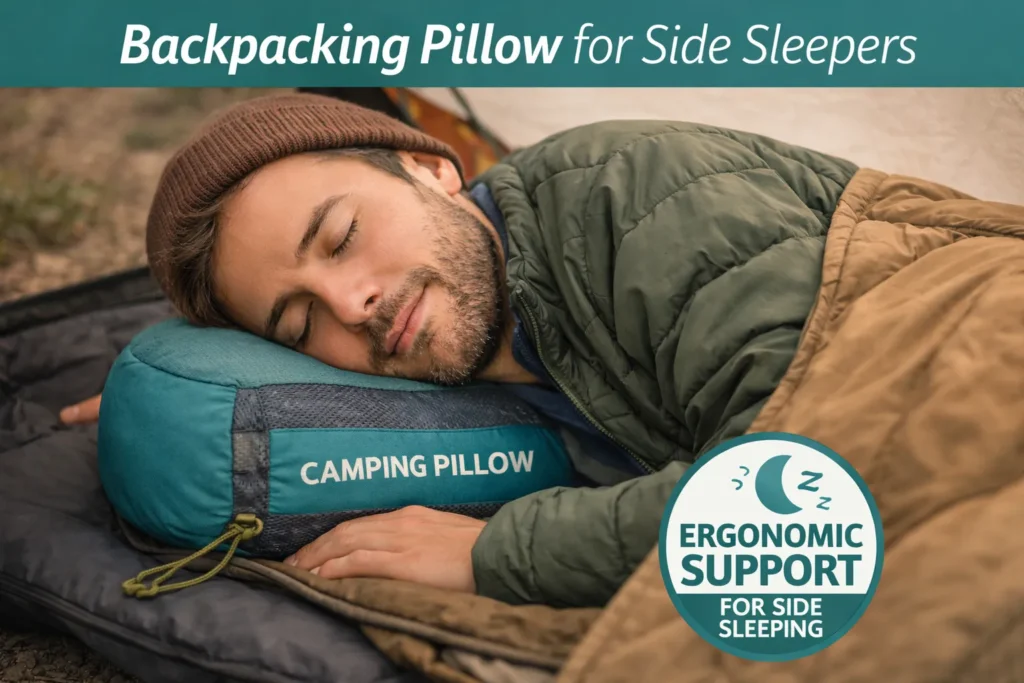
Raise head comfort with an inflatable pillow or stuff clothes into a small dry bag. Position your head toward trees or a windbreak if wind is an issue, but keep at least one tent-height distance from large dead branches.
Organize gear: keep wet items outside the sleeping area and store food in sealed containers away from the tent. Vent your tent slightly to reduce condensation without letting in drafts.
Minimizing Noise and Distractions
Pick a campsite away from trails, parking areas, and communal cooking spots to cut foot traffic noise. If you can’t avoid a busy area, pitch downwind and behind natural sound buffers like brush or a berm.
Use earplugs rated for sleep to dampen distant noise without blocking emergency sounds. White-noise apps or a small battery-powered fan can mask intermittent sounds like rustling or far-off vehicles.
Control light by facing your tent door away from bright sources and using a dark tent or blackout liner if light pollution is an issue. Keep headlamps and phone screens dim or set to night mode before bed to help your body produce melatonin.
Set simple routines: a consistent bedtime signal—reading, stretching, or a brief walk—helps your body shift into sleep mode. Silence nonessential devices and put them out of reach to reduce temptation and light exposure.