
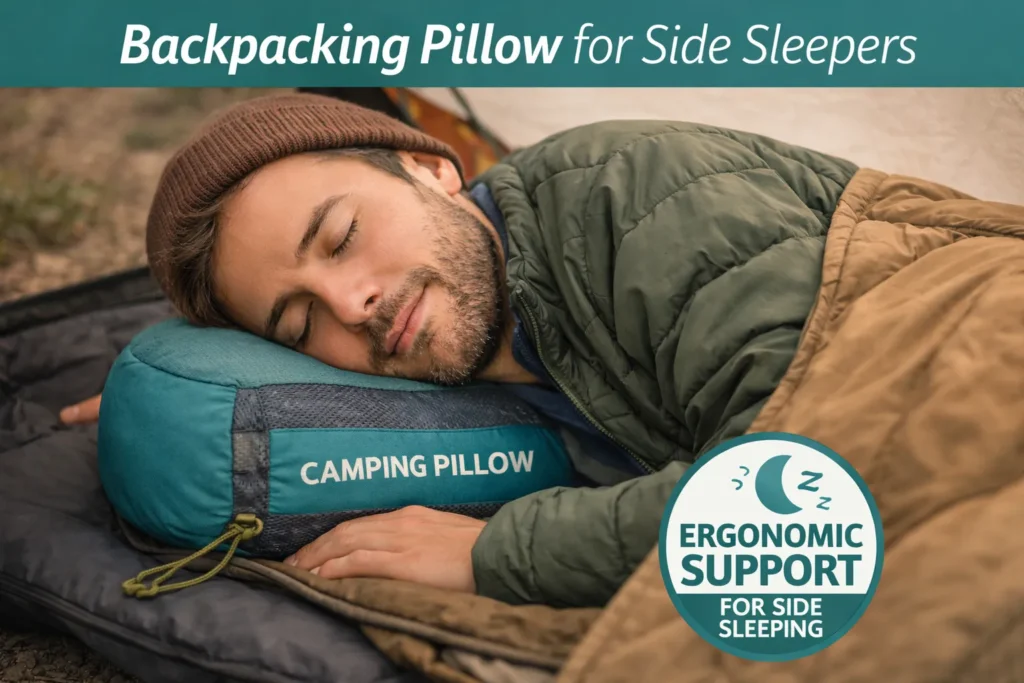
You want a pillow that keeps your neck aligned, packs small, and won’t weigh you down on a long hike. The top three backpacking pillows for side sleepers strike the best balance of loft, support, and light weight so you can sleep comfortably without sacrificing pack space.
This post breaks down those three picks and shows exactly why each one works for side-sleeping — from adjustable loft to nonslip bases — so you can pick the right fit fast. You’ll also get the quick checklist of features to watch for so every night on the trail feels closer to home.
What Side Sleepers Should Look For in a Backpacking Pillow
Focus on neck support, adjustable loft, durable materials, and ease of cleaning. Pick features that match your sleeping position, pad thickness, and pack weight limits.
Support and Loft
You need enough loft to keep your head aligned with your spine when lying on your side. Measure the thickness of the sleeping pad you use; a 3–4 inch pad commonly requires a pillow loft of 3–5 inches to prevent your head from tilting downward.
Look for a pillow that cradles your neck as well as your head. Firmer or zoned-fill pillows hold shape better than thin, fully inflatable ones, which can collapse under side pressure. If you sleep with one arm under your pillow, choose a design with a slightly firmer lower edge to maintain alignment.
Consider weight versus support. Foam or hybrid pillows add grams but often provide more consistent loft than ultralight air-only options. Balance how much weight you’ll carry against how much neck support you need for several nights of back-to-back sleep.
Material and Design
Materials determine comfort, durability, and packability. Air-only pillows use TPU bladders and are very compressible, but they risk cold spots and punctures. Memory foam or shredded-foam inserts add insulation and conform to your contours, though they compress less and weigh more.
Surface fabric affects grip and feel. Look for a nonslip outer fabric or a textured cover to keep the pillow from sliding on slick sleeping pads. A removable microfleece or polyester cover improves comfort against skin and simplifies washing.
Seam and valve placement matter. Valves recessed away from the edge reduce pressure points when you lie on your cheek. Reinforced seams and abrasion-resistant panels at contact points extend lifespan when you toss the pillow into a pack.
Adjustability
Adjustability lets you tune loft and firmness to your preferred side-sleep posture. Inflatable pillows that allow micro-inflation let you add or release air in small amounts until your neck feels neutral. Some models combine an air core with a foam layer so you can remove or add fill.
Look for multiple inflation chambers or zippered inserts if you change pads or switch between solo and partner sleeping. Height settings (often listed in inches) give a quick reference—choose models that cover a 2–4 inch range for flexible support.
Check how easy it is to adjust while lying down. One-way valves or one-click inflation systems speed setup. Also consider whether the pillow retains its setting overnight; models with firm inner structure resist gradual deflation and maintain alignment.
Maintenance and Care
You’ll want a pillow that survives dirt, sweat, and quick washes. Removable, machine-washable covers simplify cleaning after muddy camps or sweaty summer trips. For foam cores, ensure the cover can be washed without degrading the foam.
For air pillows, rinse the bladder and let it dry fully before packing to prevent mold. Repair kits for TPU bladders are useful; check if the manufacturer supplies adhesive patches or replacement valves.
Weight your cleaning options against trip length. If you plan extended backcountry use without resupply, durable, easy-to-clean materials and simple repairability matter more than a delicate ultralight fabric that requires careful handling.