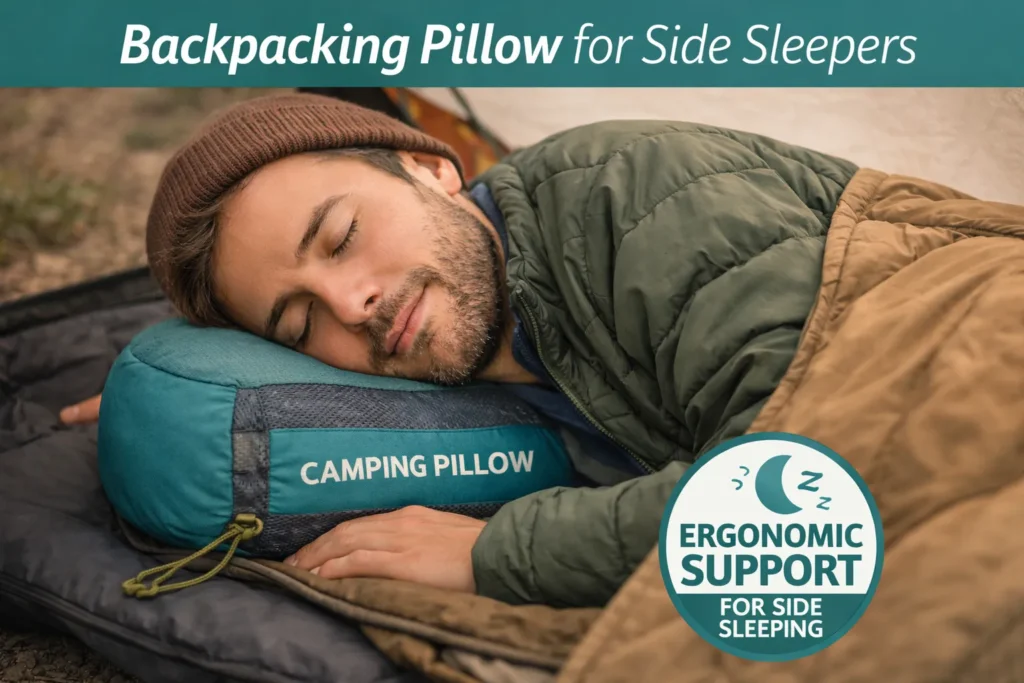

You deserve sleep that feels like home, even when you’re under the stars. Whether you hike with a pack or drive to a campsite, the right pillow cuts through neck pain, keeps you cozy, and shrinks down to fit your gear.
The most comfortable camping pillow balances support, compressibility, and weight so you get consistent neck support without bulk. This guide shows how comfort is defined, which features matter most, and how to pick the pillow that fits your sleep style and trip type.
What Makes the Most Comfortable Camping Pillow
Comfort depends on the pillow’s materials, shape and size, and how well it supports and adjusts to your sleeping position. Each factor affects weight, packability, and how close the pillow feels to your home setup.
Material Choices and Softness
Choose materials based on feel, warmth, and how much space they take in your pack. Memory foam gives a dense, conforming surface that cradles your head and neck; it’s great if you want that home-pillow feel, but it can be heavier and slower to spring back after compression. Synthetic microbead or polyester fill is lighter and dries quickly; it compresses more and can shift, so look for inner baffles or zoned construction to keep loft even.
Inflatable pillows use an air core with a soft cover. They’re the lightest and most packable, but the outer fabric and valve design determine how soft they feel against your skin. Look for a brushed or velour cover for added softness without much weight.
Check cover fabrics: polyester and nylon blends resist moisture and pack down small. Removable, machine-washable covers are practical for multi-night trips and messy conditions.
Pillow Shape and Size Options
Shape affects how your neck aligns and whether you roll off the pad. Rectangular pillows mimic home pillows and give broad head support; they suit back and combination sleepers. Contoured or kidney-shaped pillows add loft under the neck and reduce shoulder pressure, which benefits side sleepers.
Thickness matters: low-profile pillows (1–2 inches compressed) pair well with thick sleeping pads to avoid chin tilt. High-loft pillows (3–5+ inches) work when your pad is thin or for campers who like a plush feel. Some designs offer tapered edges so you can cradle your head without creating a gap.
Size impacts packability and warmth. Small travel-size pillows save space but can feel cramped. Standard or large sizes increase comfort but add bulk and weight. Choose size by how you sleep and how much room you have in your pack.
Support and Loft Adjustability
Adjustable loft gives the best custom fit. Air-core pillows let you fine-tune firmness by adding or releasing air; you can dial in neck support without changing the pillow. Compressible foam pillows sometimes include removable layers or zip-out inserts so you can reduce loft for backpacking or increase it for car camping.
Look for stability features: internal baffles prevent fill migration, and anti-slip bottoms stop the pillow from sliding on your pad. A pillow with a cinch or compression straps lets you reduce packed size without damaging the foam.
Consider insulation too. Insulated pillows combine loft with warmth; they prevent heat loss through the pad and head area. If you camp in cold conditions, pick a pillow with an insulated layer or the ability to attach to an insulated sleeping pad.
Choosing Your Ideal Camping Pillow
Pick a pillow that matches how you camp: prioritize light weight for backpacking, warmth for cold-weather trips, and easy-clean fabrics if you’ll be messy. Think about fill type, packed size, and how you sleep (side, back, stomach) to narrow choices quickly.
Weight and Packability
If you hike to your campsite, every ounce matters. Inflatable pillows weigh as little as 2–4 oz and compress down to a small stuff sack, making them the best choice when you need minimal bulk. Look for valves that seal reliably and don’t leak overnight.
For car camping, you can carry foam or hybrid pillows that weigh more but offer better immediate comfort and shape. Consider packed volume as well: a 3–4 oz inflatable that stuffs to the size of a tennis ball beats a 10–16 oz foam pillow that takes a backpack pocket. Check manufacturer specs and, if possible, compress the pillow yourself before buying to ensure it fits your pack.
Insulation and Weather Readiness
Pillow R-value matters if you sleep directly on top of it in cold conditions. Foam pillows add insulation and help prevent heat loss to the ground; some hybrid designs include a thin foam core that raises warmth without much extra weight. Inflatable pillows by themselves provide little thermal barrier unless paired with an insulating sleeve or wrapped in your sleeping bag.
Water resistance keeps fill from absorbing moisture during damp mornings or light rain. Look for quick-dry, water-resistant shell fabrics and sealed seams. If you camp in unpredictable weather, choose a pillow you can stow inside your sleeping bag or a dry bag to preserve loft and warmth.
Care and Cleaning Tips
Choose a pillow with a removable, machine-washable cover if you expect sweat, sunscreen, or food stains. Many travel pillows have zip-off covers made of polyester or microfleece; wash on a gentle cycle and air-dry to keep fabrics soft and prevent shrinking.
For inflatable pillows, wipe shell surfaces with mild soap and water and let them fully air-dry before packing to avoid mildew. Repair kits for punctures are cheap and worth carrying on long trips. If you use foam, spot-clean with a damp cloth and mild detergent; avoid saturating the foam, and let it dry completely in a well-ventilated area.